
Smart Switch Without Neutral:
Installation Steps and Safety Limits
A smart switch without a neutral wire can replace a standard light switch when the circuit has a live wire at the switch box and a load wire to the fixture. Whether it works, and whether the job is safe, depends on the model's wiring rules, the type of light it controls, and whether the circuit is part of a three-way setup.
At a Glance
Short answer: In many single-location circuits, a no-neutral smart switch works when the model supports your wiring and your light meets its minimum load. Confirm the wiring diagram and load ratings in the manufacturer's manual before you buy, and hand any unfamiliar wiring to a licensed electrician.
Check the Circuit Before You Buy
A no-neutral switch does not need a neutral wire in the switch box. It does need a live wire at the box and a load wire to the fixture, and the model must support the wiring you have.
Before you buy, confirm:
- Live Wire PresenceThe switch box has a live wire that stays energized.
- Load Wire PathA load wire runs from the switch box to the light fixture.
- Manual VerificationThe model's manual lists your specific wiring setup as supported.
- Minimum Load CheckThe model's minimum load covers the lights you plan to connect.
- Bulb CompatibilityCheck LED, incandescent, halogen, dimmable LED, and transformer-driven fixtures against the supported list.
- Circuit TypeThe circuit is a single-location circuit, or the model includes a three-way diagram.
Installation Steps
Work through these steps with the breaker off and the wires confirmed dead.
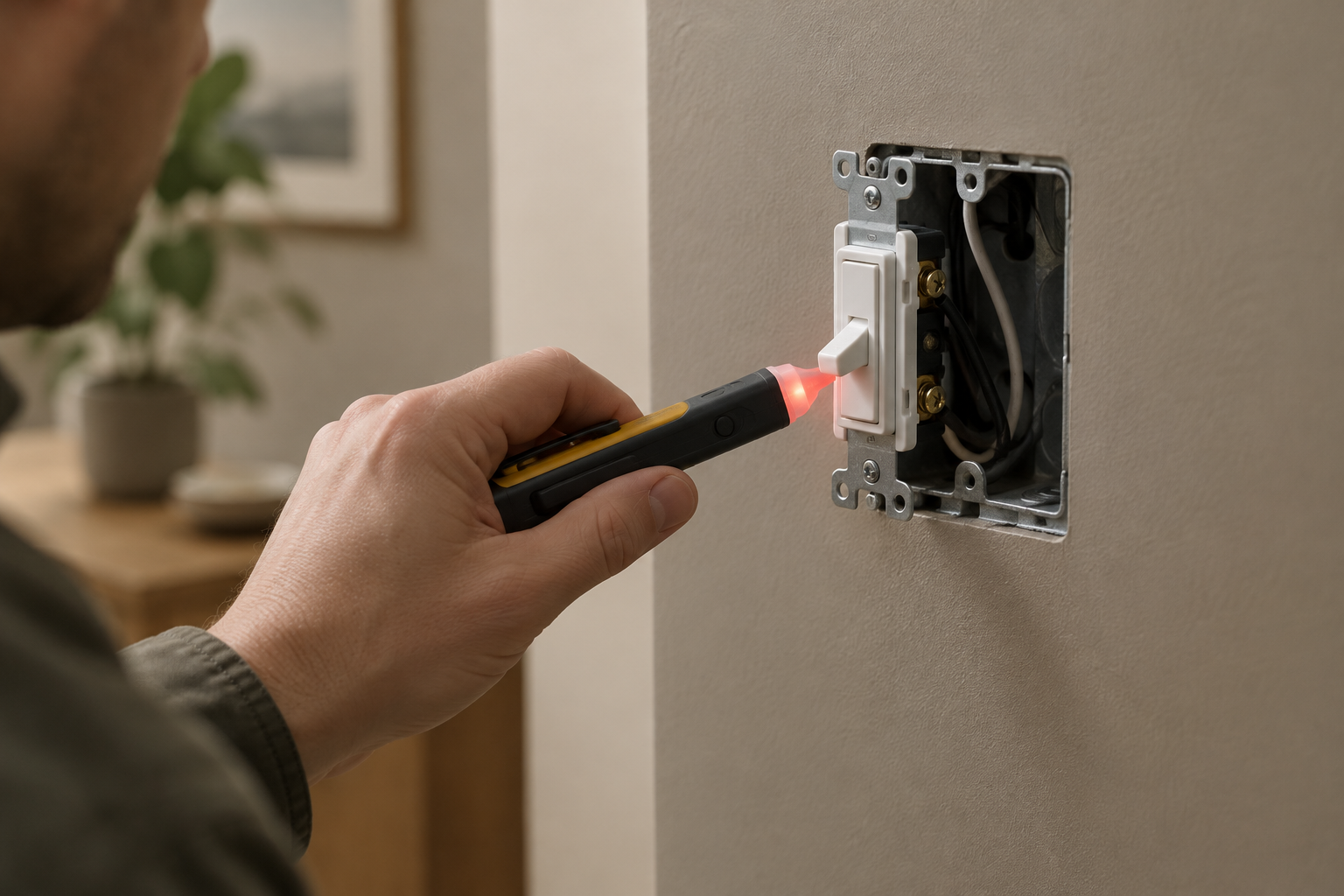
Power Down
Turn off the breaker that feeds the switch. Confirm the wires are dead with a non-contact voltage tester.
Document Wiring
Photograph the existing wiring before you disconnect anything. This is your primary safety reference.
Label and Remove
Remove the old switch. Label each wire as you disconnect it to prevent misidentification later.
Connect New Switch
Connect the live, load, and ground wires as shown in the manufacturer's diagram. A no-neutral switch uses these connections only.
Mount Flush
Fold the wires into the box carefully and mount the switch flush with the wall plate.
Test Response
Restore power, then test the switch and confirm the fixture responds immediately.
Three-Way and Multi-Way Circuits
Three-way and multi-way circuits add wiring that a single-location model may not handle. Support varies by model, so check the manual's three-way wiring diagram before you buy. If the circuit has more than two switch points, sketch the wiring on paper before you touch any wire, and consider a licensed electrician for the job.
Common Problems and What They Usually Mean
Most problems come from the load rather than the switch. Check these before you assume the switch is faulty.
Flicker or Glow
Some no-neutral switches send a small current through the bulb. Check the model's minimum load and replace incompatible bulbs.
No Response
Confirm the bulb type and wattage against the model's load rating. Check the load wire for a loose connection.
Warm or Buzzing
Turn off the breaker and stop using the switch. Have a licensed electrician inspect the circuit immediately.
Breaker Trips
Check wiring against the diagram and confirm the load is within the limit. If it trips again, call an electrician.
When to Call a Licensed Electrician
Call a licensed electrician when any of these apply:
Non-Standard Wiring
The wiring is aluminum, cloth-insulated, or visibly damaged.
Identification Issues
You cannot confidently identify the live, load, and ground wires.
Complex Circuits
The circuit has more than two switch locations, or the wiring path is unknown.
Physical Constraints
The box is too small for the new switch, or the box has no ground connection.
Code & Permit Work
The job needs breaker, panel, or permit work.
Diagram Mismatch
The manufacturer's diagram does not match what you see in the box.
Local electrical code applies to every installation.
Test the Installation
Run these checks before you close the wall:
Frequently Asked Questions
Can I install a smart switch without a neutral wire?
Often yes. The model must support no-neutral wiring, and the switch box needs a live wire and a load wire to the fixture. Confirm both in the manual before you buy.
Does a no-neutral smart switch work with LED bulbs?
It can, but some LED bulbs flicker or glow faintly with some models, especially at low loads. Check the model's minimum load and supported bulb types before you buy.
Can a no-neutral smart switch work in a three-way circuit?
Support depends on the model. Check the manual's three-way diagram before you buy, because some models do not support three-way wiring.
Is a smart switch without neutral a DIY job?
It can be, when the breaker is off, the wires are identified, and the manufacturer's diagram matches what you see. If you are not confident in any step, hire a licensed electrician.
When should I hire an electrician instead?
Hire one when the wiring is unfamiliar, damaged, or aluminum, when you cannot identify the wires, or when the job needs panel or breaker work.
Why does my LED light flicker after I install a no-neutral switch?
The most common cause is a small current through the bulb when the light is off. Check the model's minimum load and supported bulb list, then try a different compatible LED bulb.
Do I need a neutral wire for a smart switch?
Not for every model. Some smart switches are designed for no-neutral wiring, while others need a neutral. The manufacturer's diagram decides which applies to your switch.
Next Step: Compare Zigbee Wall Buttons
Once the switch is in place, a wireless wall button can add another control point without running new wire. Compare Zigbee wall buttons before you choose one.
Compare Zigbee wall buttons →